
The Biggest Android Update Ever
Plus: Circle releases ARC whitepaper

Happy Monday! Let’s recap the most important AI and crypto news from last week.
On today’s menu:
Google dropped the biggest Android update in history
CME and ICE want to regulate Hyperliquid
Circle launches ARC whitepaper and Agent stack
Today’s Big Stories:
Android 17 Update is pretty good
Google officially unveiled Android 17 — and they’re calling it the biggest Android update in the platform’s history.
That’s not marketing fluff this time – there’s a reason all the Youtubers are hyping it up.
And to be honest? It looks quite slick.
The headline is Gemini Intelligence — Google’s name for a new AI layer that doesn’t just answer questions but actually does things for you, across apps.
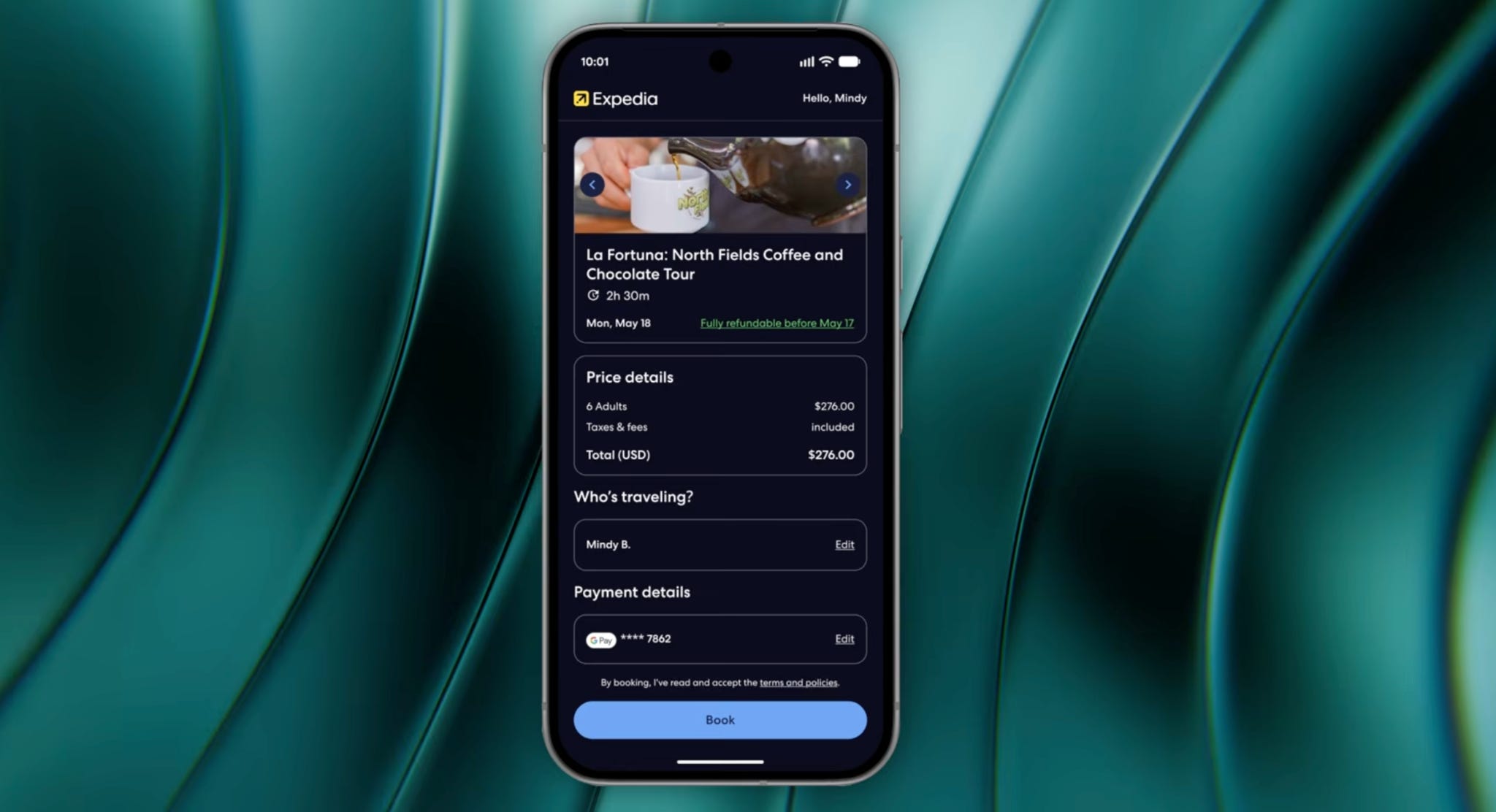
In one demo, a user showed Gemini a poster for a Costa Rica tasting tour and asked it to find something similar for a group of six. It searched Expedia in the background, found a matching tour, and offered up the payment screen — all the user had to do was tap confirm.
That’s pretty much reaching Tony Stark’s JARVIS at this point.
Other features I found pretty impressive:
Pause Point: adds a mandatory 10-second wait screen before opening apps you’ve flagged as distracting, so you can decide if you really want to use it (interestingly, it does the exact same thing as an app called One Sec, which people paid $20/year for. Now, it’s free and Google just killed an entire business, just like that).
Huge Android Auto upgrades: While driving, easily ask Gemini to order your food or text people back with just your voice. Also, the new 3D navigation is way easier to understand – it can even tell you which lane to stay on.
Rambler: Speech dictation, but smart and removes your filler words.
Advanced Protection Mode: Blocks scam calls from numbers pretending to be your bank — using on-device AI to detect and end the call automatically.
Create My Widget: Build custom widgets like a “Countdown timer for my trip” or real-time itinerary that connects to Calendar and Gmail.
ICE and CME are trying to get Hyperliquid regulated
CME and ICE — the two largest traditional derivatives exchanges — are actively lobbying the CFTC and Congress to force Hyperliquid to register as a regulated exchange, citing market manipulation and sanctions evasion risks.
The target: Hyperliquid’s crude oil perpetual contracts, which went from $339M in volume to $7.3B in just two weeks after launch (helped by HIP-3 and the Iran War).
Hyperliquid now holds 34–44% of the entire decentralized derivatives market with $619 billion in Q1 volume.
In plain English, it means Hyperliquid is eating their lunch and they want their buddies to step in.
Sound familiar? This is exactly what’s happening with stablecoin yields and the CLARITY act. Banks are lobbying heavily to ban stablecoin yields because their savings rates can’t compete.
Also, there’s a sweet irony in this Hyperliquid drama; both CME and ICE are currently under active CFTC and DOJ investigation for suspiciously well-timed oil futures trades executed on their own platforms right before federal policy announcements.
Hyperliquid’s policy center fired back immediately:
“Hyperliquid offers enhanced market transparency, publishing a complete onchain record of every transaction in real time, making it a uniquely hostile environment for insider trading or price manipulation.”
Translation: We’re actually more transparent than you are.
But it does raise the question of how onchain markets aren’t considered much in current market regulations. Perhaps the CLARITY Act will touch on that more.
Circle releases ARC whitepaper + Agent Stack
Circle had a big week.
On May 11, the company raised $222 million in a token presale for Arc — its new institutional Layer-1 blockchain — at a $3 billion fully diluted valuation, in what makes Circle the first publicly listed company to conduct a token presale.
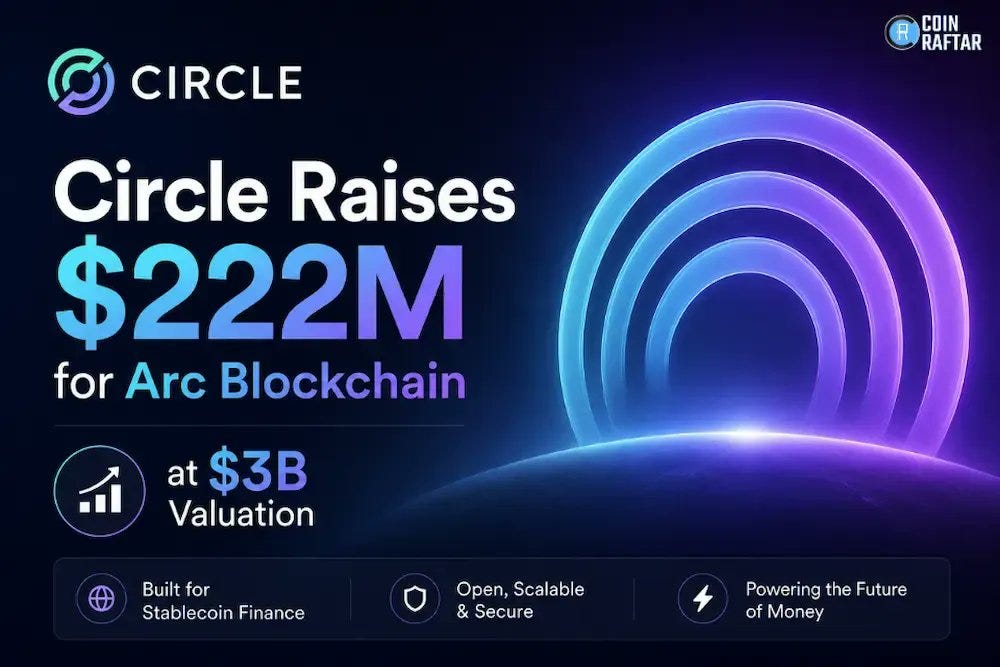
a16z led with $75 million. The rest of the cap table reads like a who’s who: BlackRock, Apollo, ICE (parent of the NYSE), Standard Chartered, ARK Invest, General Catalyst, and Haun Ventures.
When BlackRock and the NYSE’s parent company are both writing checks into your blockchain, you’ve got a good narrative going.
Alongside the raise, Circle launched the Circle Agent Stack — a full suite of tools letting AI agents hold wallets, discover services, and transact autonomously in USDC, including Nanopayments that enable gas-free transfers as small as $0.000001.
That last number is the one that matters.
A payment that costs a fraction of a fraction of a cent is a payment designed for machines, not humans — and it signals exactly where Circle is placing its bet.
Arc is meant to be the foundation underneath it all: a blockchain where USDC is the gas token, institutions run the validators, and the whole system is built for regulated, institutional-grade financial activity — not retail speculation.
And that’s where the value lies. Within multi-trillion dollar institutional flows. Just like a space program, the benefits will trickle down to the retail level for users to enjoy.
In other news
Ethereum Foundation Launches Clear Signing (Ethereum)
Code4rena is shutting down (code4rena)
Anthropic Introduces Claude for Small Business (Anthropic)
Dune lays off 25% of workforce (Hagaetc)
THORChain suffers $10.7M exploit (ZachXBT)
How did we do? Reply this email to let us know! (we’ll respond to every single one)
Thank you!