
Why is everyone talking about USVC?
Plus: Kelp DAO’s $290M robbery

Happy Monday! Let’s recap the most important crypto news from last week.
On today’s menu:
We find out if USVC is a hoax
Kelp DAO’s $290M hack became a rallying cry for DeFi
Today’s Big Stories:
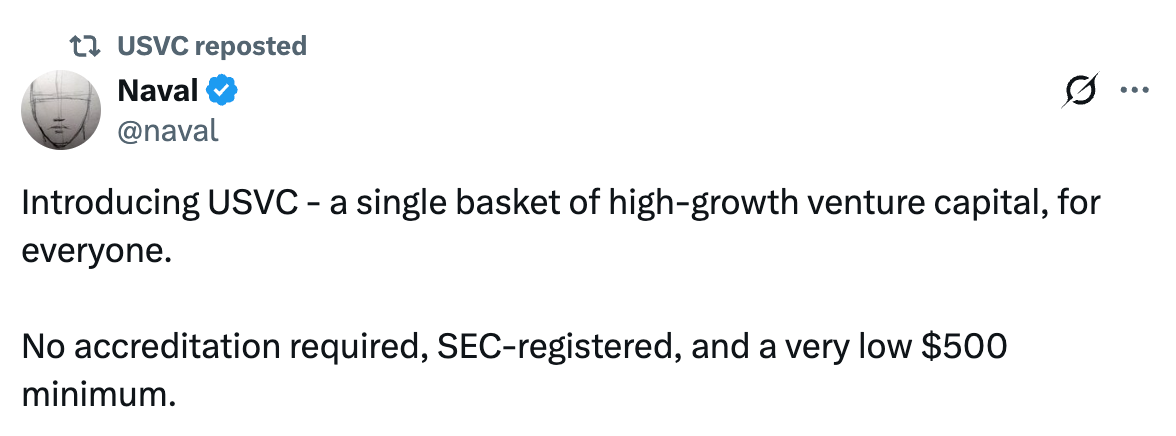
What is USVC by AngelList?
Naval Ravikant backed Uber, Twitter, and Notion before most people knew what they were. He bought Ethereum at 30 cents.
The man has been first on every major tech and crypto wave for two decades — and us normies have never been able to invest alongside him. Until now.
Naval’s company, AngelList, just launched USVC — a fund that lets any American investor put money into private AI companies like OpenAI, Anthropic, and xAI for as little as $500.
No million-dollar net worth requirement. No accredited investor gatekeeping. No connections needed.
By the way, this isn’t a new model. AngelList’s sister company, Republic, does the exact same thing: allowing regular investors the opportunity to back high-growth startups for as little as $100.
Naval’s argument for why this matters is blunt:
“By the time a stock IPOs, most of the alpha is gone. The adventure is gone. Public market investors are literally last in line.”
He’s right. The median age of a company at IPO was 6 years in 1980. Today it’s 13.
The best years of growth happen entirely in private markets — where normal people have never been allowed in.
What makes USVC different from Republic and other companies:
Instead of the traditional VC fee structure with carry and profit cuts, USVC charges a flat 1% management fee — the best part of this fund by far (normal VCs take 20% of profits).
It may not require an IPO or acquisition to pay investors out, aiming instead for quarterly redemptions of up to 5% of the fund. But this will be dependent on how well their exits perform.
As of March 2026, the fund has deployed 44% of capital into seven HUGE AI companies — xAI at 20%, followed by Crusoe, Anthropic, Sierra, Legora, OpenAI, and Vercel.
They invest directly into the companies instead of through an SPV, which may take more fees.
Here are a couple caveats:
Limited to US only.
The advertised 1% fee balloons to 2.5% net (and potentially 3.61% after October 2026 when a fee waiver expires) once underlying fund manager fees are included.
Quarterly redemptions aren’t guaranteed — the board has to approve them.
The valuations of USVC’s portfolio companies aren’t transparent: you could be investing at super-high valuations which compresses your investment returns.
My take is that if you’re an accredited investor ($200K/year in income or $1M net worth), it makes more sense to invest directly through platforms like EquityZen or AngelList.
Some people have been skeptical about this announcement:

And rightly so: if companies like xAI aren’t going to go public or increase their valuation significantly, then investors will lose through the management fees.
What I can’t see is why USVC and AngelList’s angle: If you owned stock in the next Google before it went public, why would you spend time and resources sharing it with the masses, and NOT share in any of the profits?
I don’t see this as revolutionary: there are other ways to access OpenAI stock or invest in private company returns.
You could argue that valuations are high so USVC returns aren’t great, but if you had the chance to invest in Facebook before it IPO’d, wouldn’t you?
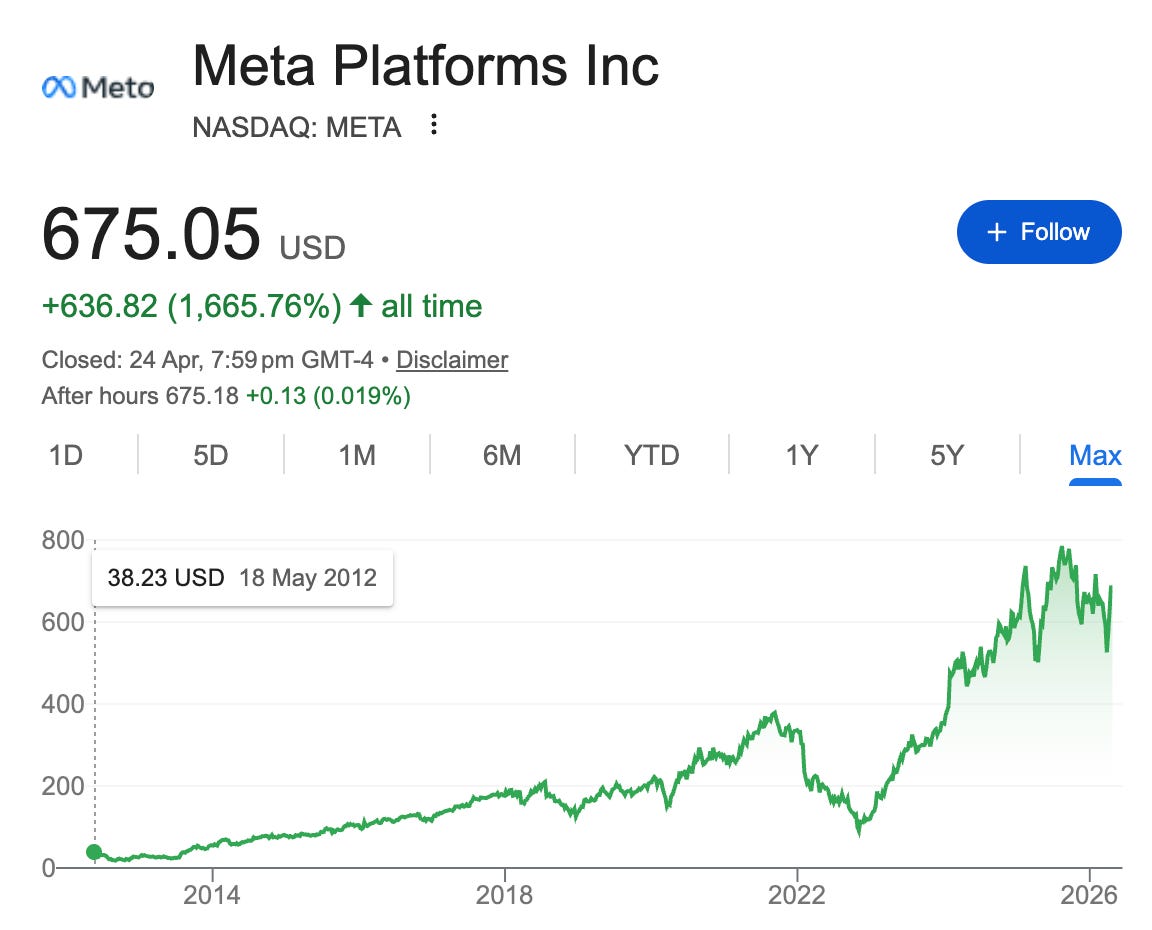
This could be a handsome opportunity for the bold.
Is DeFi still not safe?
On April 18, North Korea’s Lazarus Group pulled off the largest DeFi exploit of 2026.
Kelp DAO, a liquid restaking protocol, was drained of $292 million in rsETH (Kelp’s liquid restaking token) through a compromised LayerZero bridge — the attacker tricked a single verifier into approving a fake transaction by knocking out all other data sources via DDoS, then feeding it fraudulent cross-chain messages.
The damage spread fast: The attacker immediately deposited the stolen rsETH as collateral on Aave, Compound, and Euler — borrowing over $236 million in real assets and leaving the lenders holding worthless collateral. Aave’s TVL collapsed by $6.6 billion as panicked users fled.
Then something crazy happened.
After a little finger pointing, the ecosystem rallied behind the attack.
Aave’s service providers launched DeFi United, the first time multiple protocols have pooled capital together to absorb damage from an exploit that technically happened to someone else.
DeFi United is a recovery fund for the Kelp hack, aiming to restore full backing for rsETH.
Currently the fund has raised $230M from Lido and Aave. Even Aave’s founder is putting his own money down.
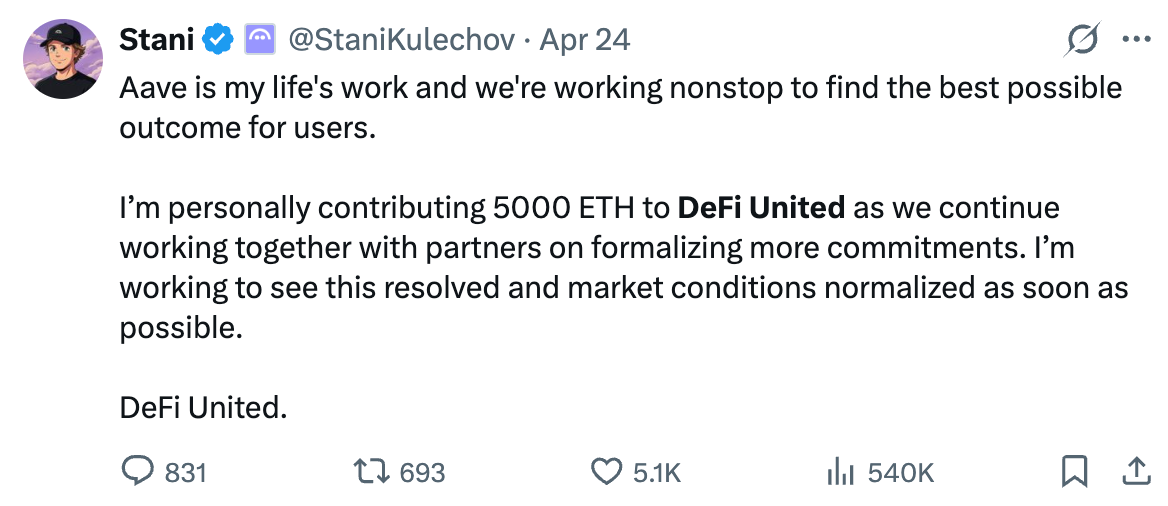
So that begs a few questions: why is everyone donating, and why is this a big deal?
Competing protocols are helping because there is a “contagion risk” to this hack.
Simply put, if Kelp collapses, these protocols have exposure + there might be less trust in DeFi as a whole → protocols think that it’s better that Kelp doesn’t die.
As for why this is a big deal: this hasn’t happened before.
There have been much bigger hacks in the past:
Ronin Bridge hack in 2022: $625 million
Wormhole exploit: $320 million
The thing is, each of these brought about isolated responses. The affected protocol just ate the loss, or a single entity bailed them out (like Jump with Wormhole).
DeFi United is different because it was a group of protocols that set aside their differences (Aave, Lido and Etherfi all compete for TVL) and voluntarily contributed to the crisis.
This obviously wasn’t all goodwill: there are definitely deals made in the background + these protocols wanted to reduce their exposure. But it makes for good PR and they’re all for it.
So the other thing is: will this set a new precedent?
Any future crises may imply that the surrounding ecosystem should come to its rescue. If Aave gets into trouble, they’re definitely going to look to Kelp to repay the favor.
But something terrifying to consider is this:
DeFi United was successful because the contributors had the money. But what if a bigger crisis comes and they barely have enough to save themselves? That will be a real stress test, and where the impact will be felt not just in DeFi, but perhaps in the entire economy.